
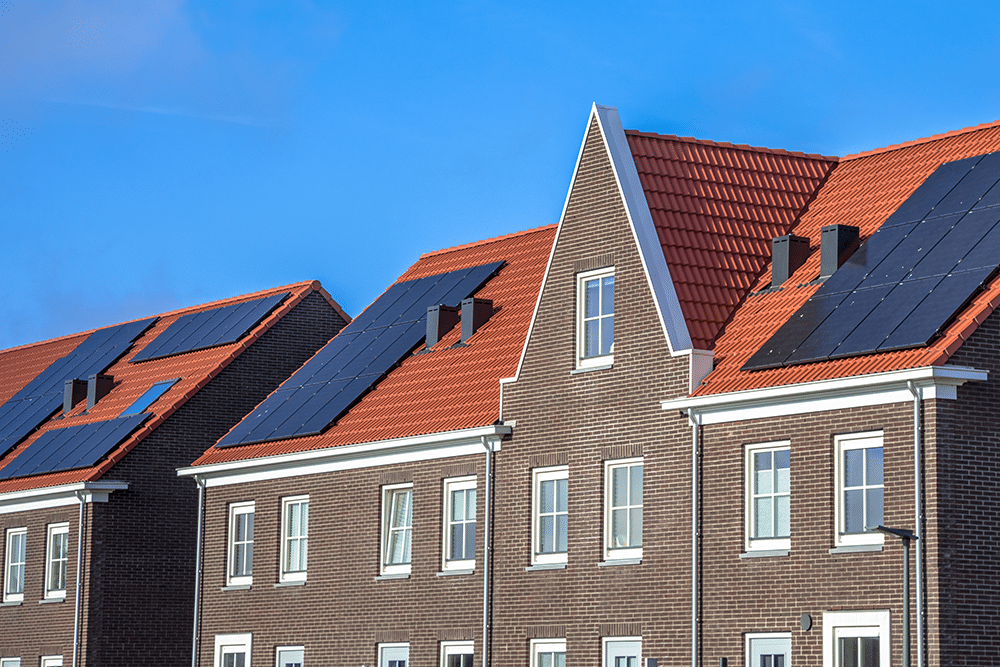
For landlords, the question of whether to invest in solar panels has shifted from “Is this a nice extra?” to “Is this a smart business decision?” Rising energy costs, tenant demand for greener homes, and the long‑term push toward net‑zero has put solar firmly on the radar. But is it actually worth it for landlords especially those managing single lets, HMOs, or older properties?
A few years ago, solar was seen as a homeowner upgrade. Today, it’s becoming a strategic asset for rental properties. In short, solar is no longer just an eco‑friendly gesture. It’s a competitive advantage. Here’s why:
- Energy prices remain unpredictable and tenants value lower bills.
- EPC expectations are tightening even if deadlines shift and improving efficiency is still a long‑term necessity.
- Green homes rent faster especially to younger tenants and remote workers.
- Government incentives and VAT reductions have made installation more affordable.
What does solar cost?
According to WhatCost / Solar Guide’s 2025 pricing data, typical solar installation costs £5,700–£7,000 for a standard 3–4 kW system and an additional £2,500-3,500 if you add a battery (optional but increasingly popular) – source: https://whatcost.co.uk/solar-panels/system/3kw – Note: the price provided is for smaller houses, landlords should do their own research for their specific property types.
Costs vary depending on roof size and angle, whether scaffolding is needed, the age and condition of the property and whether you choose panels only or panels + battery. For landlords with multiple properties, economies of scale can sometimes apply especially if you work with the same installer across your portfolio.
Leasing roof space
There is also the option of leasing roof space for PV panels but be aware that if your property is mortgaged, most lenders’ mortgage conditions will require the lender’s consent to be obtained to any lease. Some lenders may also have in place protections (in the form of restrictions entered on the title at Land Registry) which prevent the registration of a lease without the lender’s written consent – source: https://shorturl.at/1GCdV
Who benefits from the solar energy?
This is where things get interesting. If the tenant pays the electricity bill, then they benefit directly from lower bills. The landlord benefits indirectly through higher rental demand, longer tenancies, a more attractive EPC rating and potentially higher rent.
If the landlord pays the electricity bill (e.g., HMOs) then they benefit directly from reduced energy costs. This can significantly improve margins in all‑inclusive HMOs.
If a landlord installs a battery, then stored energy can be used during peak times, making the system even more cost‑effective especially in HMOs or serviced accommodation.
Does solar increase rental value?
In many cases yes, but not always in a straightforward “add £X to the rent” way. Solar tends to increase:
- Tenant interest (your listing stands out)
- Viewing-to-application conversion
- Tenant satisfaction
- Length of tenancy
These factors reduce void periods, which often has a bigger financial impact than a small rent increase. For HMOs, solar can directly reduce your operating costs, which can justify higher room rates or simply improve your net yield.
Does solar increase property value?
Buyers increasingly see solar as a long‑term cost‑saving asset, not a novelty. Most UK studies suggest solar can increase property value by 2–4%, depending on:
- The age of the system
- Whether it’s owned outright
- The EPC improvement
- Local demand for greener homes
What are the downsides for landlords?
Solar isn’t perfect. Here are the main drawbacks to consider:
- Upfront cost: Even with incentives, it’s a significant investment.
- You may not directly benefit: If tenants pay the bills, they get the savings not you.
- Not all roofs are suitable: Shaded, north‑facing, or structurally weak roofs may not work.
- Maintenance responsibility: Solar systems are low‑maintenance, but not zero‑maintenance. Landlords remain responsible for inverter replacement every 10–15 years, occasional cleaning, and monitoring system performance.
- Payback period: Most systems take 6–10 years to pay for themselves. If you plan to sell soon, the return may be limited.
How solar helps with EPC ratings?
Solar can significantly improve EPC scores, especially when combined with LED lighting, loft insulation, efficient heating systems and smart thermostats. Even a modest solar setup can push a property from a D to a C which is increasingly important for future compliance and tenant expectations.
What types of landlords benefit most?
Best fit
- HMO landlords
- Long‑term portfolio landlords
- Landlords with high‑demand urban properties
- Landlords planning EPC upgrades anyway
- Those wanting to differentiate in competitive markets
Less ideal
- Short‑term landlords planning to sell
- Properties with unsuitable roofs
- Low‑demand areas where green features don’t influence rent
So, is solar worth It?
For many landlords yes, but with conditions. Solar is most worthwhile when:
- You plan to hold the property long‑term
- You want to improve EPC ratings
- You manage HMOs or all‑inclusive rentals
- You want to attract eco‑conscious tenants
- You’re already budgeting for upgrades
It’s less compelling if you’re looking for a quick return or if the property isn’t structurally suitable. As the UK moves toward greener housing standards, solar is becoming less of a “nice‑to‑have” and more of a strategic investment that protects your property’s future value.
At 3mc, we have a team of expert advisers who can discuss all your mortgage requirements. If you would like to discuss your options, give the 3mc team a call on 0161 962 7800.
All calls are recorded for training and monitoring purposes. 3mc for intermediaries only.
*Your home may be repossessed if you do not keep up repayments on your mortgage. 3mc (UK) Ltd is authorised and regulated by the Financial Conduct Authority and is entered on the Financial Services Register https://register.fca.org.uk/s/ under reference 302992. Please note: The FCA do not regulate Business Buy to Let Mortgages.